
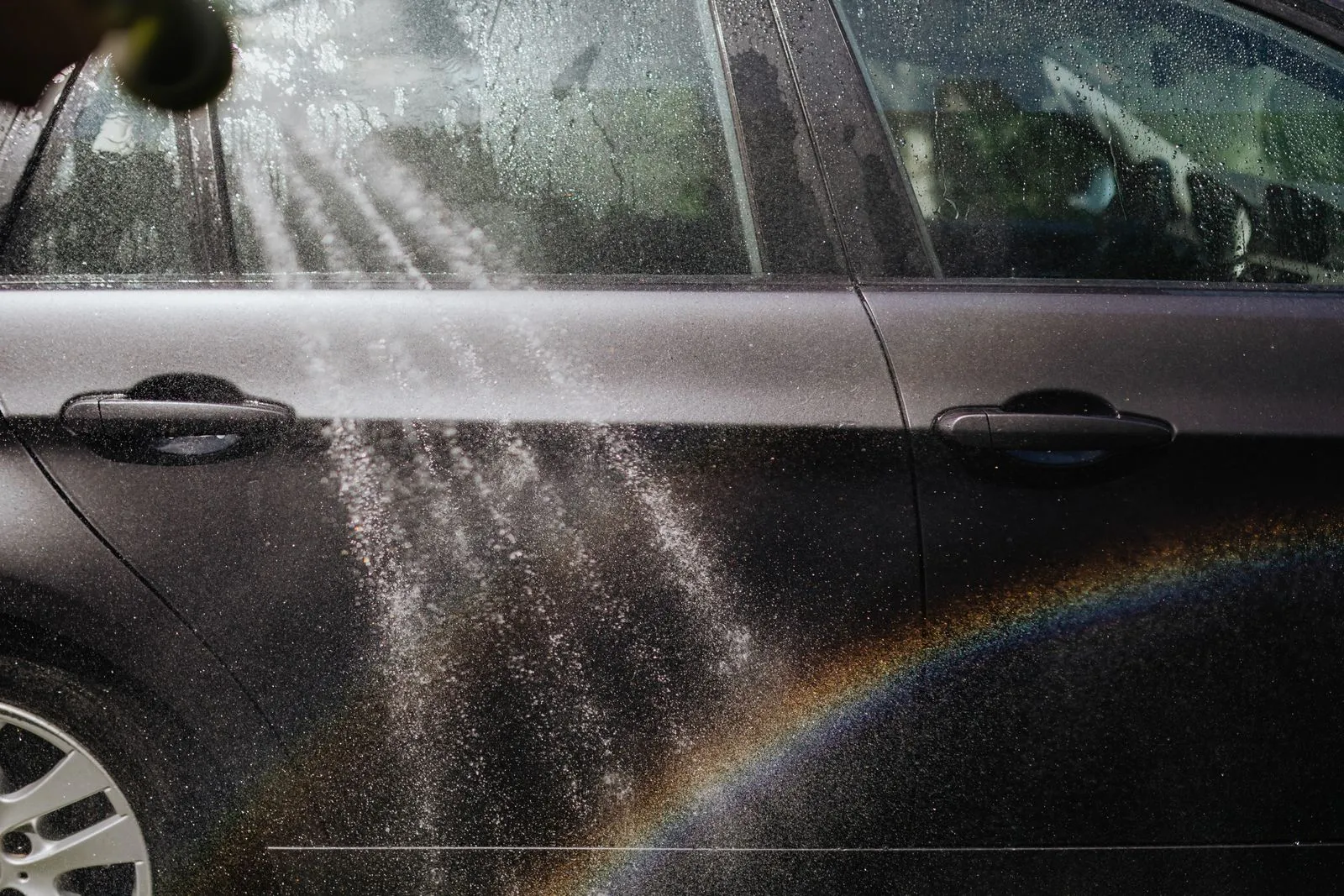
A touchless car wash cleans your vehicle without rotating brushes or cloth strips making contact with its body. Instead, the system applies cleaning solutions and directs pressurized water across the exterior to loosen and rinse away grime. The process is convenient for routine cleaning, especially when you want to avoid contact from shared wash materials. Here’s what happens during a typical wash—and what touchless cleaning can and cannot remove.
The car gets pre-rinsed
First, the wash directs water over the vehicle to remove loose dust, grit, and road debris. This initial rinse helps clear particles that could otherwise remain on the surface while the cleaning solution works. The water may come from several nozzles positioned around the vehicle, allowing it to reach the hood, roof, sides, and lower panels.
A pre-rinse is useful, but it is not the same as hand washing. Stuck-on mud, dried bugs, or thick grime may need more attention than a spray alone can provide. If your vehicle has heavy buildup, check whether the wash offers a pretreatment option or consider a more thorough cleaning method.
Cleaning solution loosens grime
Next, the system applies car-wash detergent across the exterior. The solution helps loosen common road film, oily residue, and dirt so water can carry them away. Some washes apply different products at separate stages, such as a presoak followed by a main cleaning solution. The exact steps and formulas vary by equipment and wash facility.
Letting the solution work for the time built into the wash cycle matters. The detergent needs contact with the surface to help lift grime, but it should not be left to dry on the paint. Follow the wash’s instructions, and avoid starting a cycle when the exterior is hot or when conditions may cause products to dry unusually quickly.
Directed water pressure rinses
After the solution has loosened the dirt, high-pressure water jets sweep over the vehicle. Nozzles aim streams across the body to rinse away detergent and suspended debris. Their movement and spray pattern help cover broad surfaces and reach areas such as wheel wells, lower doors, and the front and rear of the car.
Water pressure does the work that brushes perform in a conventional automatic wash, but it does not scrub the surface. That distinction helps prevent contact with wash brushes or cloth strips, yet it also means touchless systems may leave some bonded contaminants behind. A clean-looking finish can still benefit from occasional detailing when deposits do not rinse away.
Drying and realistic expectations
Many touchless washes finish with a final rinse and powerful air dryers. The rinse clears remaining product, while moving air pushes water off the vehicle to reduce droplets and streaks. Drying results depend on the equipment, the car’s shape, and how well water drains from mirrors, trim, and other recessed areas.
Touchless washing is a practical choice for regular maintenance, but it cannot promise to remove every stain or protect paint by itself. For best results, remove loose items from the vehicle, close windows, and follow posted directions. If residue remains after the wash, use a clean, vehicle-safe method rather than rubbing dry dirt across the paint.
A touchless car wash combines detergent with directed water pressure to loosen and rinse away everyday grime without brushes contacting your vehicle. It offers a convenient way to keep up with routine cleaning, though stubborn deposits may need extra care. For a touchless wash in Grand Rapids, visit Fresh Lane Wash and check the posted instructions before you begin.